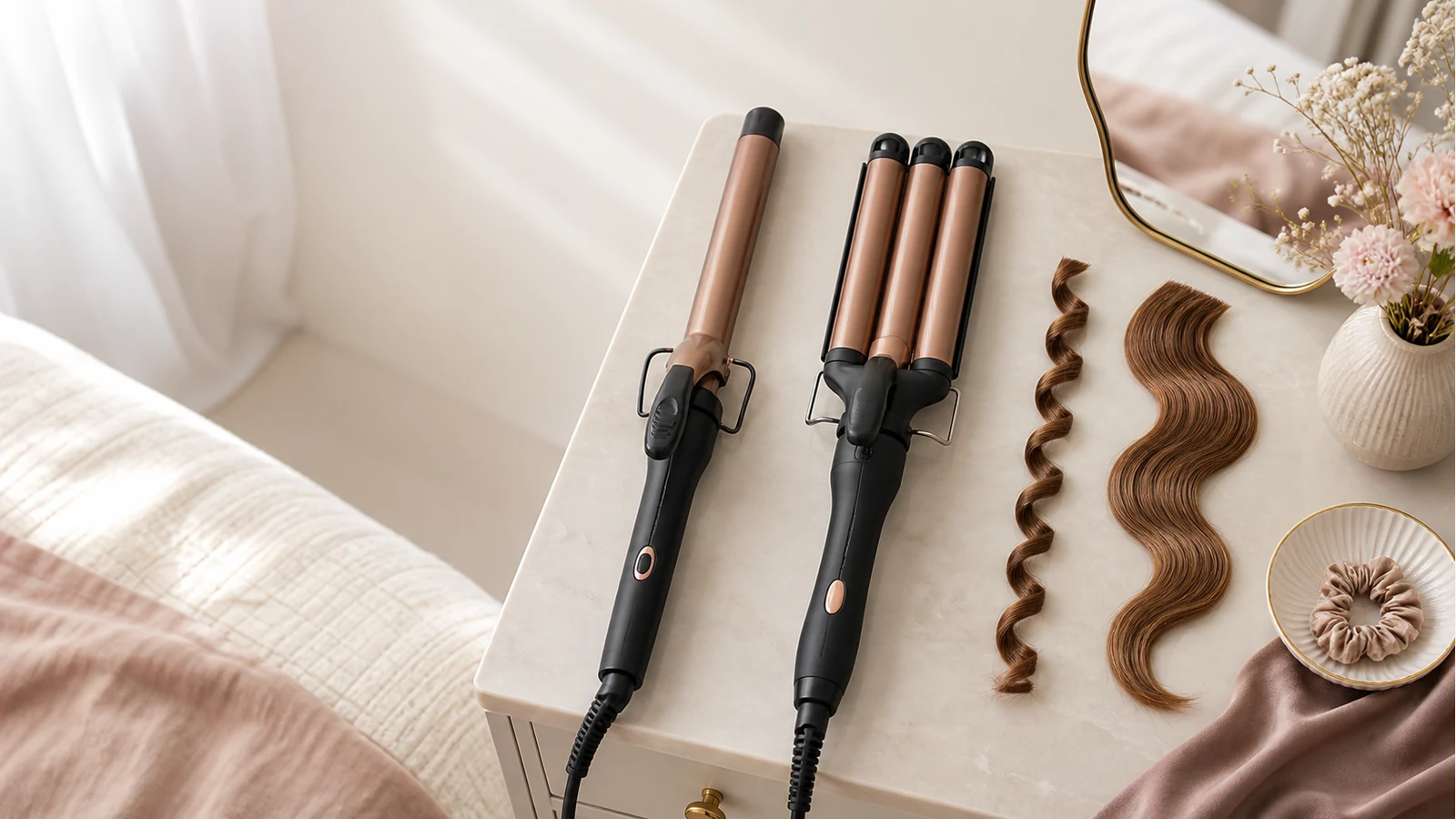
Curling Iron Vs Hair Waver For French Waves Uk
Direct answer: choose a curling iron or wand if you want shaped curls with more styling variety; choose a triple-barrel hair waver if your actual goal is soft, repeated S-waves with less wrapping skill. For the loose French-girl finish, most beginners will find the waver route easier because you clamp sections rather than spiral-wrap every piece.
The common mistake is buying for the word “curl” when the saved reference photo is not really a curl. It is usually a relaxed bend: flatter at the root, looser through the mid-lengths and brushed or finger-softened so it does not look too formal.
The finish is different
A curling tong, curling iron or wand builds shape by wrapping hair around a barrel. UK beauty guides such as the Good Housekeeping UK guide to curling tongs and wands describe the practical difference between clamped tongs and wands: both can curl, but the finish and handling feel different. That matters if you dislike neat ringlets.
A triple-barrel waver presses the hair into a repeated S pattern. British Vogue’s barrel waver guide places wavers in the beachy, mermaid and undone texture family, which is closer to the French-wave look many people search for. UK retail descriptions for tools such as a triple-barrel waver on LOOKFANTASTIC use similar beach-wave language, so the category itself is aimed at texture rather than classic curls.
Decision table
| Question | Curling iron or wand | Triple-barrel waver |
|---|---|---|
| Look you want | Defined curls, face-framing pieces, more variation | Soft S-waves, mermaid texture, undone bends |
| Learning curve | Needs wrap direction, tension and symmetry | Clamp, release, overlap; easier to repeat |
| Speed on long hair | Can be slower because each section is wrapped | Often quicker for all-over texture |
| Burn-risk feeling | More exposed wrapping near fingers | Less wrapping, but plates are still hot |
| Best fit | Shorter detail work and polished curls | Shoulder-length to long hair wanting broad waves |
When the curling iron still wins
Keep the curling iron if you want deliberate curls, a curled fringe, polished ends or one tool that can create several shapes. It also makes sense for very short layers that cannot sit across a wide waver plate. A waver is not a universal upgrade; it is a more specific route to one texture family.
When the waver wins
Pick the waver if your frustration is that tong curls look too tight, bridal or “done”. Clamp-based waving is especially useful when both sides of your head never match with a wand. The overlap pattern makes it easier to repeat the same bend without constantly changing wrist angle.
Who should not switch yet
Do not switch just because a waver is trending if your hair is a very short bob, if you love ringlets, or if you mainly style tiny face-framing pieces. Also pause if your hair is breaking from heat; technique and hair condition matter more than tool category.
A sensible next step
Decide by the reference photo, not by the tool name. If the picture shows continuous S-waves, read the difference between mermaid waves and beach waves next. If harsh lines are your fear, the clamp-mark troubleshooting guide is the better follow-up.
If you have already decided that clamp-based S-waves suit your hair length and routine, you can compare the same-site product route here: view the mermaid wave curler. Treat that as a fit check, not a promise that one tool beats every named brand.
Sources
- Good Housekeeping UK, curling tong and wand guide
- British Vogue, barrel waver guide
- LOOKFANTASTIC, triple-barrel waver product information