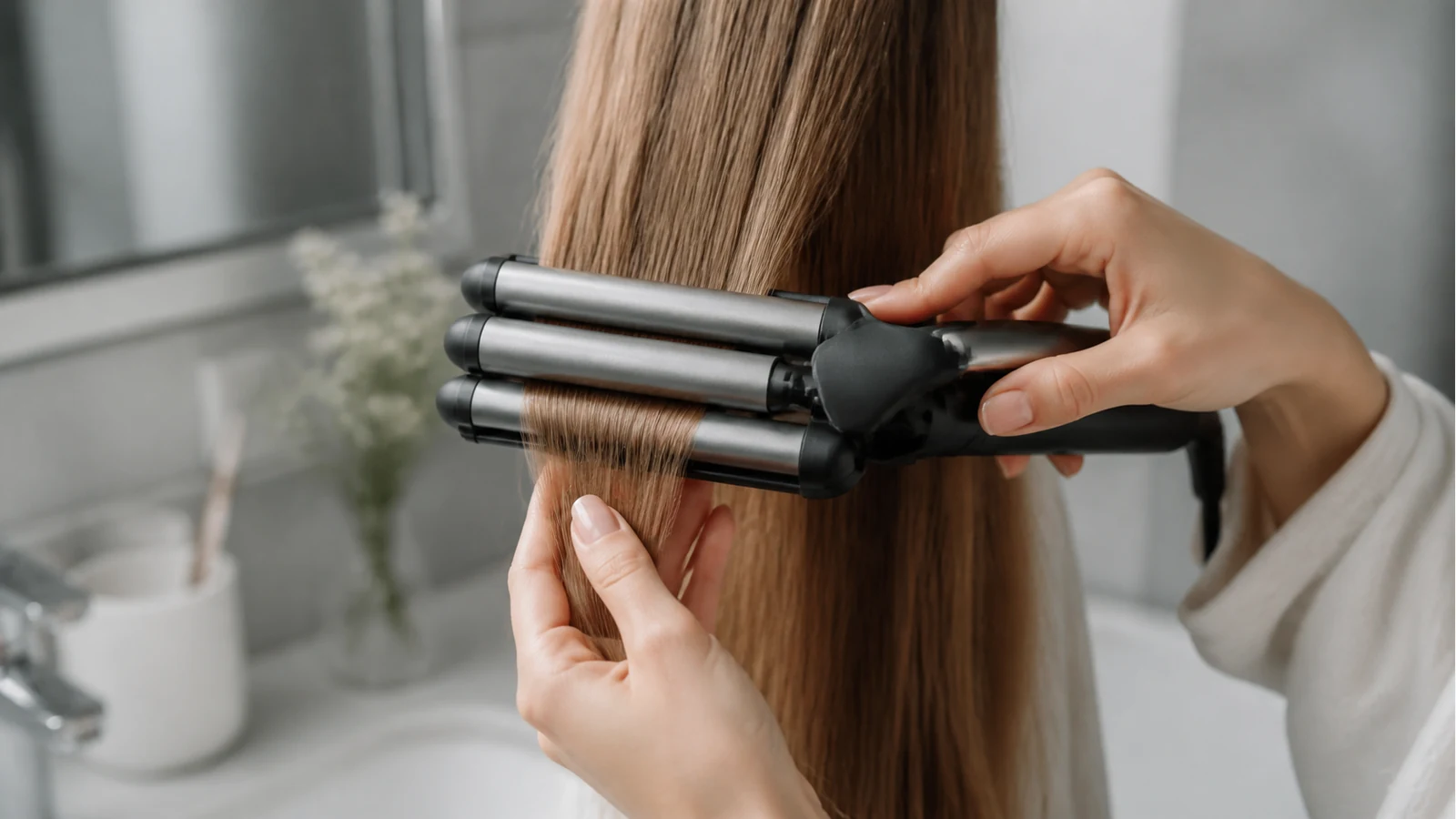
Hair Waver For Fine Hair Uk
Direct answer: fine hair can use a hair waver, but the technique has to be gentler: smaller sections, lighter product, shorter clamp time, full cooling and finger-softening instead of heavy brushing. The goal is shape without crushing the strand.
Fine hair is honest. It shows clamp dents, product overload and heat mistakes quickly. That does not mean a waver is wrong; it means the margin for error is smaller than it is on dense or coarse hair.
Diagnostic ladder
- Waves look crushed: use thinner sections, lighter pressure and start lower on the top layer.
- Waves drop quickly: let them cool untouched before softening and use a light texturising product for grip.
- Hair feels coated: reduce oils and heavy creams before waving.
- Ends look stiff: leave the last few centimetres freer for a modern finish.
- Hair feels fragile: stop and prioritise condition before more heat.
Clamp time and cooling
British Vogue’s barrel waver guide notes that finer hair generally needs less clamp time than thicker hair and that waves should cool before brushing out. That is the main fine-hair rule: do less while the section is hot, then give the shape time to settle.
The same caution appears in broader hot-tool advice. Good Housekeeping UK’s curling tong and wand guide discusses controlled heat and shorter holds for fine hair. Even though that article covers tongs and wands, the fine-hair principle carries over: do not use more heat than the strand needs.
Product rules for fine hair
- Use heat protectant, but avoid soaking the section.
- Choose light texture or flexible spray instead of heavy oil before waving.
- Add hold in thin layers rather than one sticky coat.
- Comb product through so it does not gather in one visible patch.
When a large or deep waver is not the first buy
If your hair is chin length or has very short layers, a wide waver may not have enough length to form a clean S pattern. Stylist UK’s waver review discusses soft triple-waver texture and the practical reality that shorter pieces can be harder to fit across this kind of tool. In that case, a smaller tong or heatless method may make more sense.
Technique before upgrade
Before buying a pricier tool, test technique on one side of your head: lighter pressure, slightly smaller sections, lower starting point, and a full cool-set before touching. If that fixes the issue, the problem was not the tool category.
Next step if the fit is right
If your hair is long enough for a broad S-wave and you want a clamp-based routine rather than wrap curls, you can check the same-site option here: view the mermaid wave curler. For prep first, use the heat protectant checklist; for visible dents, use the clamp-mark guide.
Sources
- British Vogue, barrel waver guide
- Good Housekeeping UK, curling tong and wand guide
- Stylist UK, waver review