Heat Protectant Before Hair Waver Uk
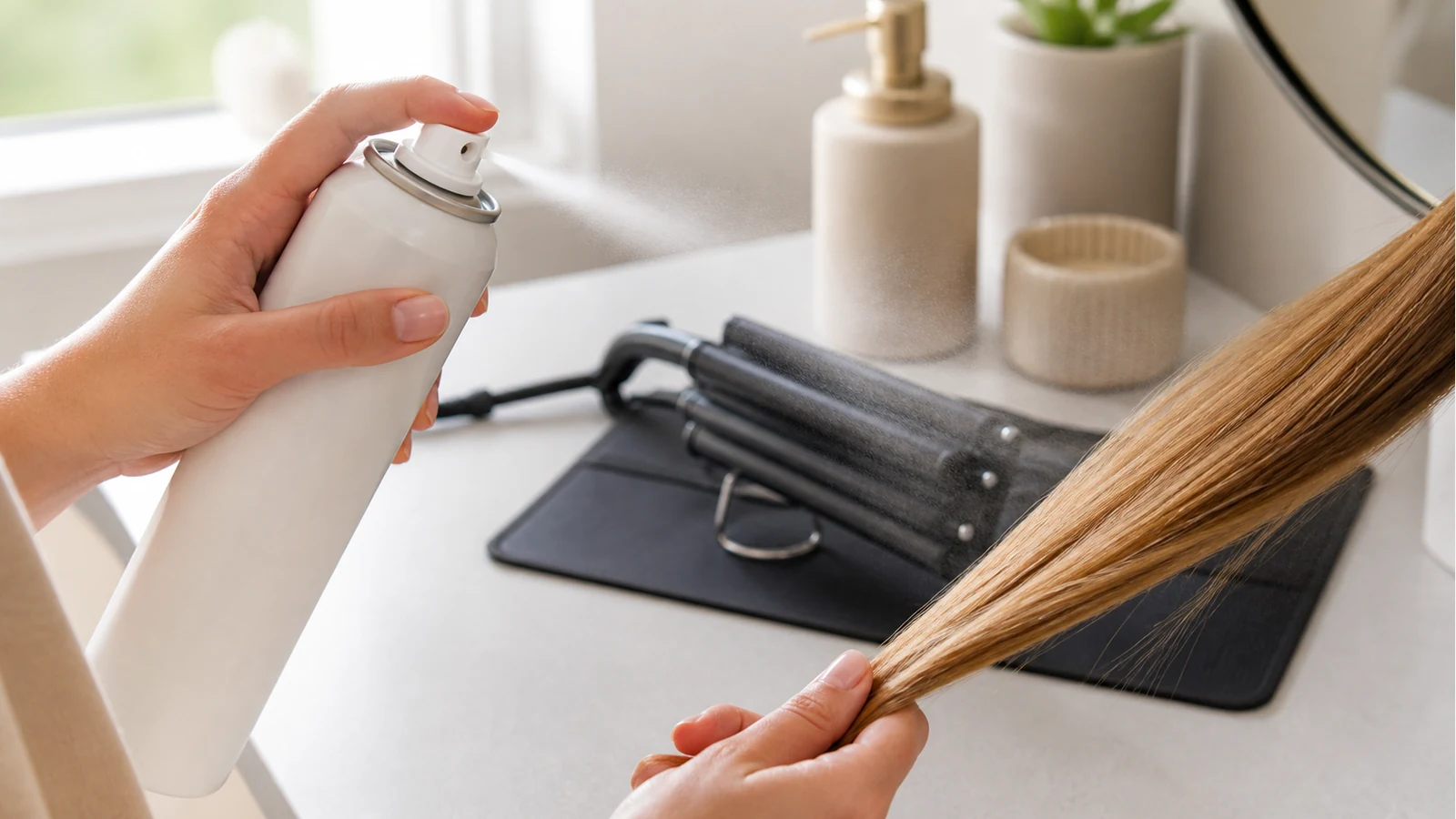
Direct answer: yes, use heat protectant before a hair waver, but do not clamp hot plates onto damp product. Choose a protectant that suits your situation, mist it evenly, comb it through if needed, wait until the hair feels dry to the touch, then wave.
The “sizzle mistake” usually happens when someone sprays too much product, immediately clamps the section, and hears moisture react under heat. The fix is not complicated: dry hair, light application, waiting time and controlled sectioning.
Wet styling spray vs dry restyling spray
Many protectants are designed for use before blow-drying damp hair. Others are made for dry restyling before straighteners, tongs or wavers. The label matters. Good Housekeeping UK’s heat-protection mistakes guide explains why wet-versus-dry use is a real distinction and why wet product under hot tools can be a problem.
Paul Mitchell UK’s heat protectant guidance also advises applying protectant before styling and staying within the product’s stated heat range. That is more useful than copying a temperature from someone else’s hair type.
The checklist
- Start with hair that is fully dry.
- Pick a protectant labelled for dry heat styling if you are restyling day-two hair.
- Mist lightly section by section instead of soaking the whole head.
- Comb or brush through so one patch is not overloaded.
- Wait until the section feels dry to the touch.
- Clamp briefly, release, then let the wave cool before touching it.
Temperature common sense
Fine, coloured or fragile hair should normally start with the gentlest effective setting your tool and product instructions allow. Thick hair may need a different approach, but the first test should still be conservative. There is no need to chase maximum heat if a shorter section, cleaner prep or better cooling gives the shape.
Mistakes to avoid
- Do not wave damp hair unless your specific tool is designed for that use.
- Do not oversaturate the roots; it can make the top look flat or marked.
- Do not brush out waves while they are still warm if you want them to last.
- Do not treat protectant as a licence for repeated unnecessary heat passes.
A UK news report summarising dermatologist advice, the Manchester Evening News warning on heat protectant and hot tools, reinforces the same practical point: let protectant dry fully before using straighteners or curling tongs.
Who should pause
If your hair is snapping, gummy after bleaching, or visibly breaking, pause the heat routine and consider a trim or professional hair advice. A protectant reduces styling risk; it does not reverse existing damage or make unlimited heat harmless.
Related help
For delicate strands, read the fine-hair waver guide. If the issue is dents rather than dryness, use the clamp-mark checklist.
Sources
- Good Housekeeping UK, heat-protection mistakes
- Paul Mitchell UK, heat protectant guidance
- Manchester Evening News, dermatologist warning report